Medical test scanning app
Reading a medical test from a photo
A UK medical diagnostics company had a colour-change screening test for a chronic-condition complication — and no objective way for patients to read the result at home. CodeLeap built the computer vision that reads the test from a phone photo, the app that guides patients through it, and the dashboard clinicians track results on.
What we did CodeLeap built a two-step algorithm for shape detection and colour measurement, a patient app for capturing the test and a clinician dashboard for tracking results, and the system was later adapted for academic clinical research.
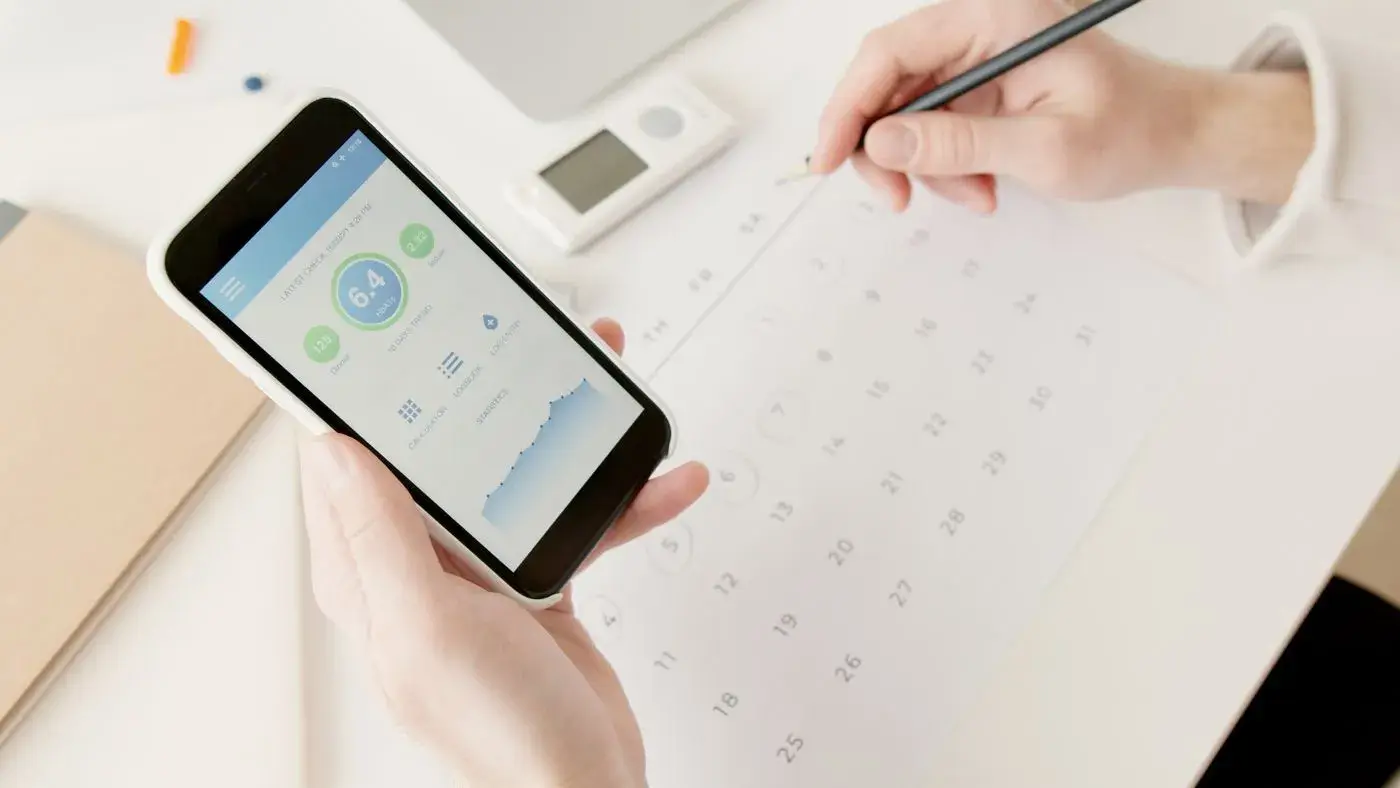 A lab test, read from a photo.
 Our client makes a screening test that shows its result as a colour change, which is dependable in a clinic and hard for a patient to judge by eye at home. Standardising that across thousands of different phone cameras and badly lit bathrooms is harder again. They partnered with CodeLeap to make the phone do the reading, and we delivered the first version in around ten weeks.
Product features
-
Computer vision that reads the test
A two-step algorithm where shape detection finds the test in the photo and colour detection measures the result inside it. It was engineered to cope with varied lighting, camera quality and stray objects in the frame, because the conditions a patient photographs in cannot be controlled.
-
A patient app that guides the capture
A React Native app for iOS and Android walks patients through applying the test and photographing the result, then uploads it straight to their healthcare professional. There is no judgement call to make, no paperwork, and no appointment needed simply to read a result.
-
A clinician dashboard
A React web interface where healthcare professionals view each patient's results and track how they change over time. That turns scattered individual tests into a record a clinician can act on rather than a series of isolated readings.
-
A version built for clinical research
When a UK university adopted the product into a multi-year clinical study, we built a stripped-down study version with anonymised patient identifiers, standardised devices and samples on a fixed schedule. The data then holds up to academic scrutiny, which an ordinary consumer app's data would not.
Challenge
The clinical problem is easy to state and hard to solve. A colour-change test read by eye gives a subjective result that varies between people and cannot be tracked reliably over time, and the obvious fix, having a phone read it, runs straight into the fact that no two phones, rooms or patients are alike. The algorithm therefore had to work in conditions nobody could control: different cameras, different lighting, objects in the frame, and patients with no training in how to take the photograph. Anything that only worked under good conditions would have been worse than useless, because a confident wrong reading is more dangerous than no reading.
Solution
CodeLeap built the two-step computer vision algorithm, the patient app for iOS and Android, and the web dashboard clinicians track results on. Splitting shape detection from colour measurement is what makes it robust: the system first establishes exactly where the test is in an uncontrolled photograph, and only then measures the colour inside that known region. The product shipped to production and to the app stores, and the phone camera became the objective reader the test never had. A UK university has since adopted it into a multi-year clinical study, and the client has come back to CodeLeap phase after phase over several years to keep building on it.
Tech stack
The tech chosen was our speciality, enabling fast development of performant AI pipelines and a reliable infrastructure.
- Frontend
- React Native (iOS & Android), React (clinician dashboard)
- Hosting
- Cloud infrastructure
- AI
- Custom two-step computer vision algorithm for shape detection and colour measurement
Keep exploring
-
 Udokk
UdokkUdokk saw growing demand for trustworthy digital health content and had an extensive professional network ready to create it. CodeLeap built the platform where healthcare professionals publish scientific and educational video for practitioners, students and the public, and earn from it.
read more -

'%20fill-rule='evenodd'%20clip-rule='evenodd'%20d='M91.8237%2056.0059C93.2939%2055.133%2093.2939%2053.0046%2091.8236%2052.1317L59.7254%2033.0733C58.2236%2032.1816%2056.3223%2033.2639%2056.3223%2035.0104L56.3223%2073.1272C56.3223%2074.8737%2058.2236%2075.956%2059.7254%2075.0643L91.8237%2056.0059ZM103.325%2032.7602C119.498%2042.3628%20119.498%2065.7748%20103.325%2075.3774L71.2272%2094.4358C54.708%20104.244%2033.7936%2092.3388%2033.7936%2073.1272L33.7936%2035.0104C33.7936%2015.7988%2054.708%203.89359%2071.2272%2013.7019L103.325%2032.7602Z'%20fill='white'/%3e%3c/g%3e%3c/g%3e%3c/g%3e%3c/g%3e%3c/g%3e%3c/svg%3e) Hurdl
HurdlThe client wanted to build a community where people could be matched with others who had walked a similar path through mental-health difficulties. CodeLeap designed and built the app across iOS, Android and web, together with the moderation needed to keep that community safe.
read more -
 The Frida Project
The Frida Project offers mental health support from licensed therapists inside small online peer groups, and the founders needed to validate the idea with real users before spending the rest of their budget. CodeLeap launched the iOS and Android MVP in under three months, and it averaged 4.9 stars soon after launch and reached thousands of users.
read more