ChatQuote
AI quoting software for service businesses
Most service businesses can't publish a price list, because every job needs a few questions before it can be priced. ChatQuote asks those questions on the business's own website, at any hour, then drafts an itemised quote and a branded proposal from the business's own rates.
What we did CodeLeap designed, built and runs ChatQuote: the assistant that holds the conversation on a business's website, the engine that drafts itemised quotes and branded PDF proposals from that business's own pricing, the setup that learns the business from its website and past quotes, and the dashboard where its team reviews every lead.
Website chatquote.app
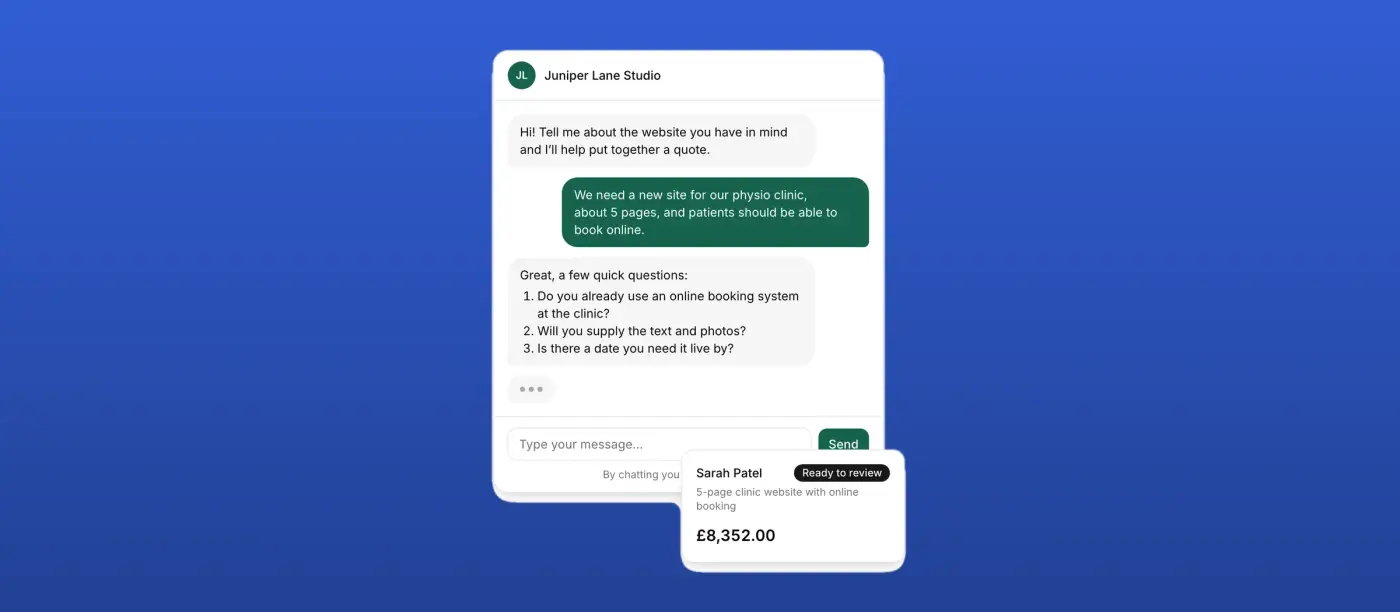 Enquiry in. Itemised quote out.
Builders, electricians, removals firms, decorators, roofers, cleaning companies, and web and marketing agencies all price work the same way: each job needs a few answers before anyone can put a number on it. Those enquiries tend to arrive in the evening, at weekends or while the owner is on a job, and the quote gets written later, often after hours. ChatQuote is the product CodeLeap built for that gap. It sits on the business's website as a branded chat, asks the questions the business would ask on a discovery call, collects the prospect's contact details along the way, and leaves a draft quote and proposal waiting for the team.
It launched in September 2026. Because it is new, this page describes what the product does rather than customer results.
Product features
-
A discovery call on the website
The assistant asks the questions that decide scope and price, a few at a time, learned from the business's past quotes with its own rules applied first, such as always asking about access. It collects name, email and phone during the conversation instead of through a form, and the business decides whether it may give a non-binding ballpark from its rates or keep prices out of the chat entirely.
-
Itemised quotes and branded proposals
Each finished chat leaves a draft quote priced the way the business prices, whether by the day, per unit, as a fixed fee or monthly, with assumptions, exclusions, timeline and payment terms written in. A branded PDF proposal comes with it, and a line can be changed by typing what to change, with every edited line shown.
-
Learns the business on its own
At sign-up it reads the business's website and writes a briefing and service catalogue, then learns rates, VAT, payment terms and the questions to ask from a few quotes the business has already sent. It shows what it learned, and takes corrections in plain English, listing every change it made.
-
People decide what goes out
Every proposal waits for an “Approve & send” unless the business switches on automatic sending. Before going live the team can play the prospect in simulated chats that email no one, and the chat stays closed to visitors until someone turns on the go-live switch.
-
Leads, transcripts and team roles
Every enquiry arrives with a one-line summary, the full transcript and an email to the admins when its quote is ready. Phone and email enquiries can be added from notes or documents to get the same draft quote, and members work the leads while quotes, rates and settings stay with admins.
-
Privacy and security designed in
Business data is stored in London, although some processing, including the AI models, happens outside the UK. The public assistant never sees the past quotes it learned from, every request is checked on the server against the organisation and role, the public chat is rate-limited and isolated in its own frame, and deleting a lead removes its chat, quotes and documents with it.
Challenge
Quoting bespoke work is slow in a way that costs jobs. An enquiry comes in, and before anything can be priced there are questions about size, timing and scope, which can turn into days of email. The quote is then assembled after hours by copying an old one and checking the VAT, for a job the business may not win, and by the time it is sent the prospect has often asked other firms too.
Automating that came with three constraints. The quote had to come from the business's own prices and way of quoting, not from a model's general idea of what work costs, and nothing priced could reach a prospect without the business's say-so unless it chose otherwise. Setup had to be close to automatic, because a firm with no time to write quotes has no time to write prompts or rulebooks either. And a chat open to the public on someone else's website had to be safe to leave running: rate-limited, isolated, and unable to reveal the private material it learned from.
Solution
CodeLeap built ChatQuote as a multi-tenant web product in which each business gets its own assistant, trained on its own material. Setup takes four steps: enter the web address so it learns what the business sells, upload a few past quotes so it learns how the business prices, test it by playing the prospect, then switch it on. The assistant runs on the business's site from one line of code or behind a shareable link, in the business's own name, logo and colours, with no ChatQuote branding in the chat or on the proposals.
Behind the chat, separate AI roles handle the website research, the learning from past quotes, the conversation and the quote breakdown, each running as a durable workflow that can resume after a failed step. The assistant that talks to prospects works from what was learned rather than from the original quotes, and every draft lands on the lead's page for review, where the team can approve it, change it by typing, or let it send automatically if they have chosen to.
Tech stack
The tech chosen was our own SaaS foundation, enabling fast development of a secure, multi-tenant product.
- Frontend
- Next.js and React
- Backend
- Supabase (Postgres and authentication), hosted in London
- Hosting
- Vercel, with server functions in London
- Services
- Resend email, Sentry error reporting, branded PDF proposals
- AI
- Anthropic's Claude models through the Vercel AI SDK, run as durable workflows and traced with Langfuse
Keep exploring
-
 SBU
SBU is a UK energy broker placing gas and electricity contracts for business customers, in a market where the deal goes to whoever quotes first and follows up hardest. Their chance to win each customer sat in Salesforce as a contract end date with nothing acting on it, so CodeLeap automated everything between that date and the signed contract. Within three months the team was generating five times the qualified leads, without adding headcount.
read more -
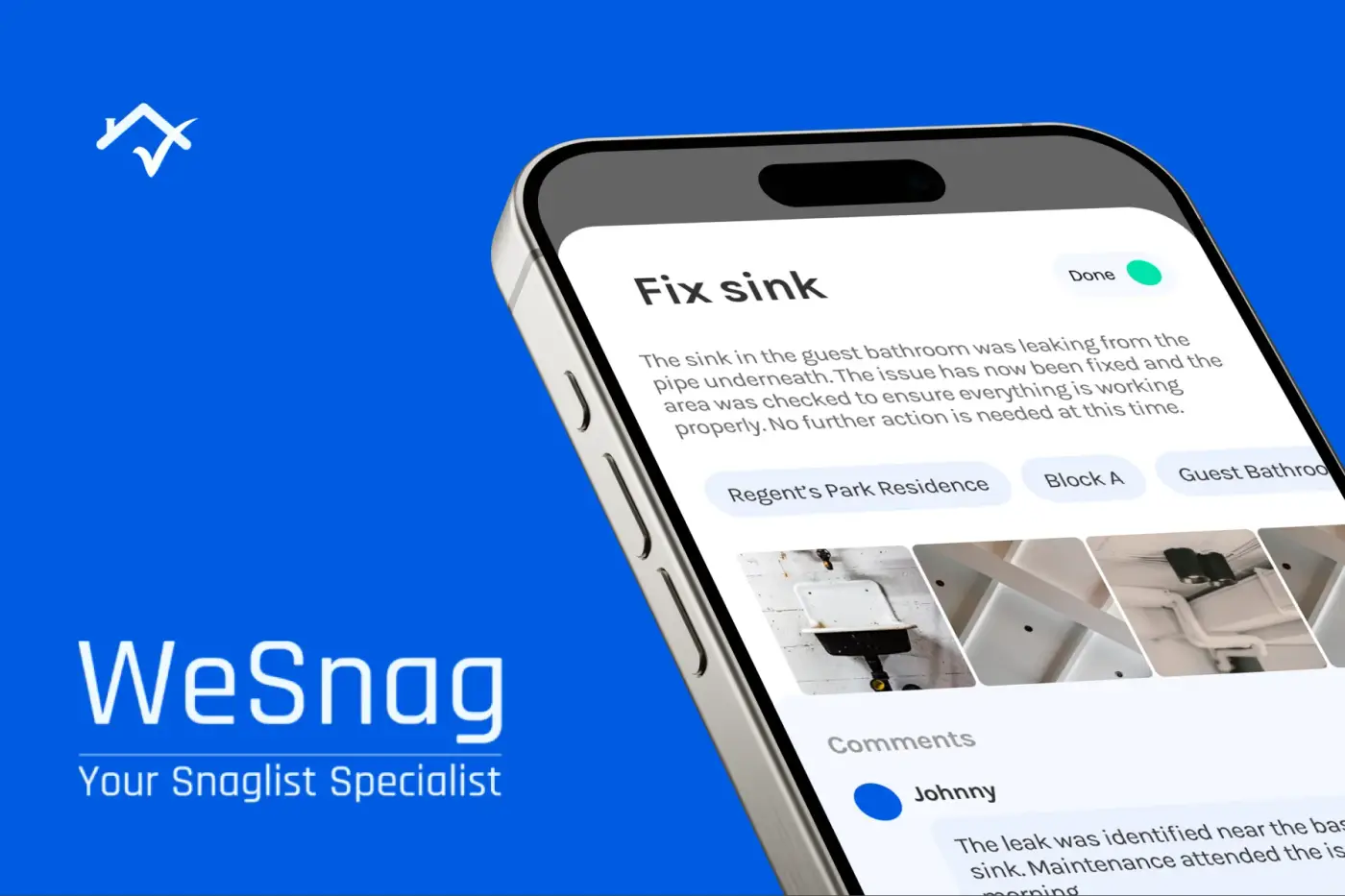 WeSnag
A major UK construction company ran snagging on spreadsheets, paper checklists and manual follow-ups, which could not scale to dozens of contractors, hundreds of units and thousands of defects. CodeLeap built a platform digitising the whole defect lifecycle, replacing hundreds of hours of manual coordination and leading to further work extending it.
read more -
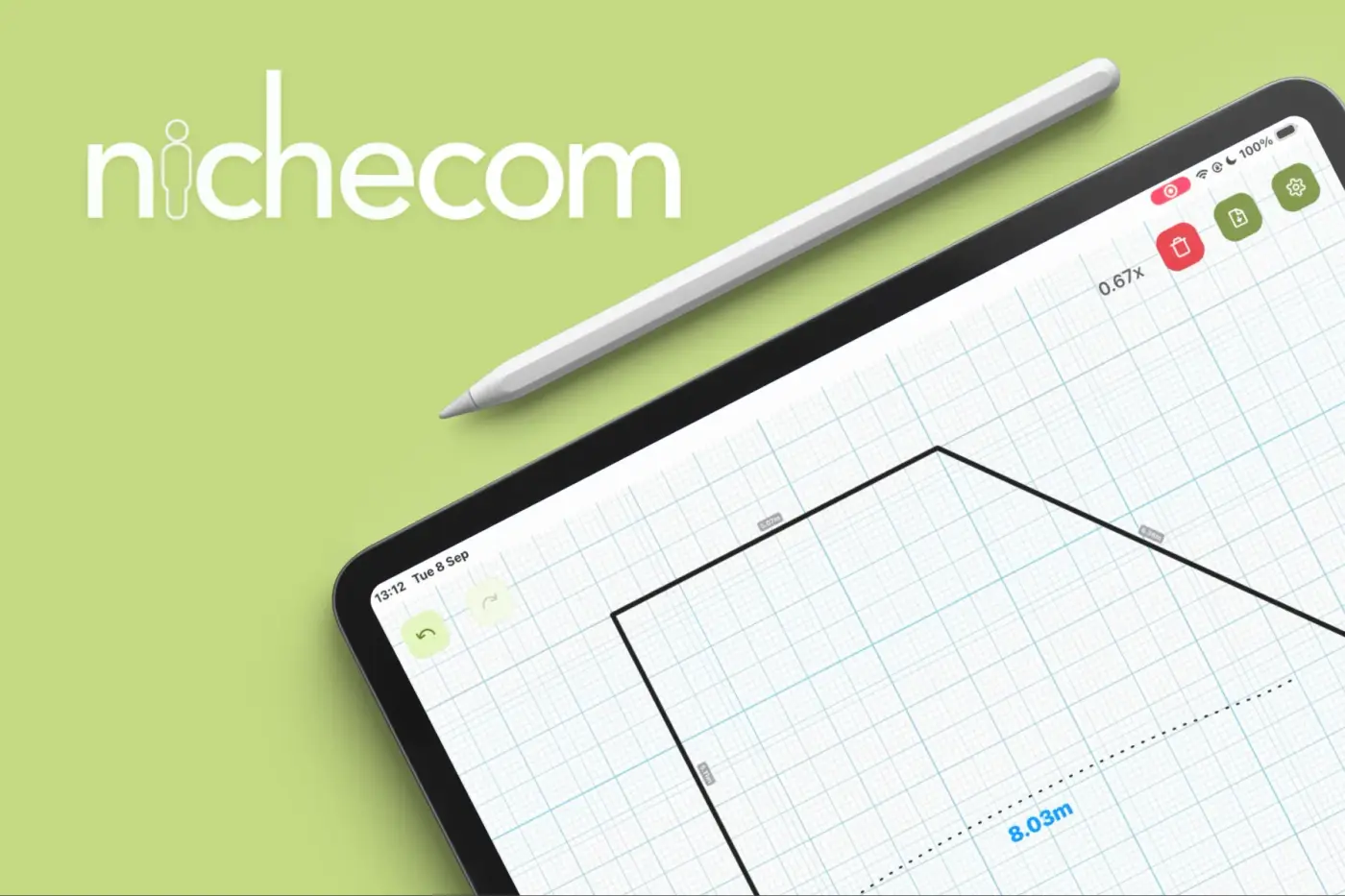 NicheCom
 needed to prove that a surveyor could measure a property and produce a finished floorplan during a single site visit, without redrawing it back at a desk. CodeLeap designed and built the iPad app that makes that possible.
read more